Word Explanation
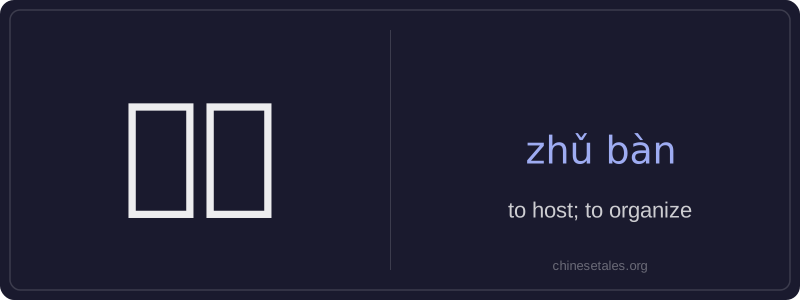
主办 means 'to host' or 'to organize', especially for formal events, conferences, competitions, or exhibitions. It combines two characters: 主 (zhǔ), meaning 'main' or 'host', and 办 (bàn), meaning 'to handle' or 'to manage'. Together, they convey the idea of taking primary responsibility for planning, coordinating, and executing an event or activity.
This verb is commonly used in official, academic, or professional contexts — for example, when describing who is responsible for a conference, festival, or sports tournament. It often appears with organizations, institutions, or groups as subjects (e.g., a university or government department), and frequently co-occurs with nouns like 活动 (activity), 会议 (meeting), or 比赛 (competition). While it can be used transitively (主办+object), it’s rarely used in passive constructions or with aspect markers like 了 without additional context.
Example Sentences
Related Words
见面
见面 literally means 'see face' — combining 见 (t
背后
背后 literally means 'back + behind' and functions
我的
我的 (wǒ de) is a possessive pronoun meaning 'my'
中学
'Zhōngxué' literally combines 'zhōng' (middle)
面条
‘面条’ (miàn tiáo) literally means ‘flour str
后来
Later (hòulái) is an adverb meaning 'afterwards'
在家
'Zài jiā' literally combines the preposition 'z
不对
不对 (bù duì) literally combines 不 (bù), meani