Word Explanation
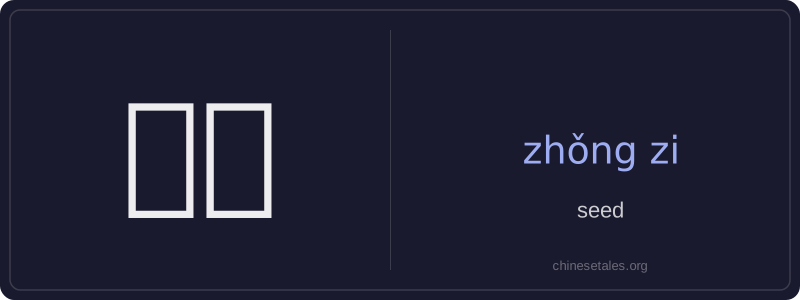
‘种子’ (zhǒng zi) literally means ‘seed’ — the small, often hard plant structure capable of developing into a new plant. The first character, 种 (zhǒng), means ‘kind’ or ‘type’, and also carries the meaning of ‘seed’ in certain compounds; the second character, 子 (zi), is a common noun suffix that often denotes smallness or concreteness, reinforcing the idea of a discrete, tangible object. Together, they form a standard, unambiguous term for biological seeds — whether agricultural (like rice or sunflower seeds), botanical (in science classes), or metaphorical (as in ‘the seeds of an idea’).
This word is neutral in register and widely used across everyday speech, farming contexts, biology education, and even idioms. It’s distinct from the verb form 种 (zhòng), meaning ‘to plant’ — a common source of confusion for learners. While ‘种子’ refers specifically to the reproductive unit of plants, it’s rarely used for animal eggs or human offspring (those use different terms like 卵 or 孩子).
Example Sentences
Related Words
见面
见面 literally means 'see face' — combining 见 (t
背后
背后 literally means 'back + behind' and functions
我的
我的 (wǒ de) is a possessive pronoun meaning 'my'
中学
'Zhōngxué' literally combines 'zhōng' (middle)
面条
‘面条’ (miàn tiáo) literally means ‘flour str
后来
Later (hòulái) is an adverb meaning 'afterwards'
在家
'Zài jiā' literally combines the preposition 'z
不对
不对 (bù duì) literally combines 不 (bù), meani