Word Explanation
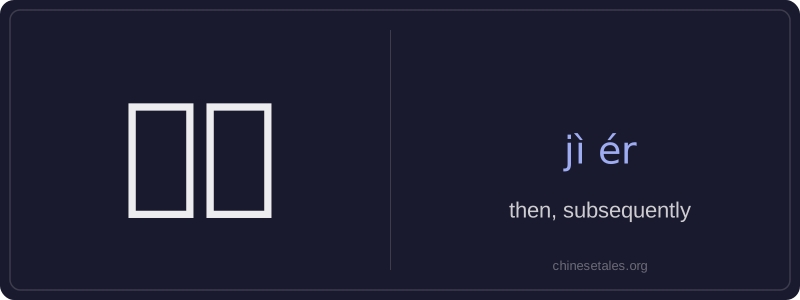
继而 is a formal written conjunction or adverb meaning 'then', 'next', or 'subsequently', indicating a logical or temporal sequence between two events or actions. The character 继 (jì) means 'to continue' or 'to follow', while 而 (ér) is a classical particle that often links clauses and implies progression or consequence. Together, 继而 emphasizes an orderly, almost inevitable succession — not just time order, but causal or narrative continuity. It's commonly found in essays, news reports, historical narratives, and formal speeches, rarely in casual conversation.
This word typically appears at the beginning of a clause or sentence, followed by a verb phrase. It functions similarly to 'and then' or 'thereafter', but with greater elegance and concision. Because it’s stylistically elevated, using it in spoken language may sound overly stiff or literary. Learners should note that 继而 cannot stand alone as a complete sentence and always requires a predicate after it — unlike the more flexible 然后.
Example Sentences
Related Words
见面
见面 literally means 'see face' — combining 见 (t
背后
背后 literally means 'back + behind' and functions
我的
我的 (wǒ de) is a possessive pronoun meaning 'my'
中学
'Zhōngxué' literally combines 'zhōng' (middle)
面条
‘面条’ (miàn tiáo) literally means ‘flour str
后来
Later (hòulái) is an adverb meaning 'afterwards'
在家
'Zài jiā' literally combines the preposition 'z
不对
不对 (bù duì) literally combines 不 (bù), meani