Word Explanation
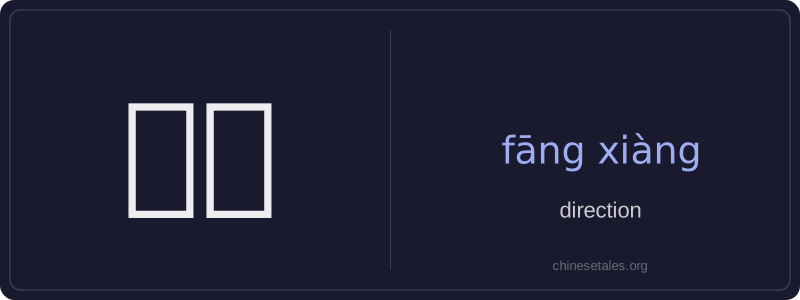
方向 (fāng xiàng) literally combines 方 (fāng), meaning 'side' or 'region', and 向 (xiàng), meaning 'toward' or 'facing'. Together, they form the core noun 'direction' — referring to the path or orientation along which something moves, points, or is aimed. It can indicate physical orientation (e.g., north, left, forward) or abstract orientation (e.g., a project’s strategic direction).
This word is commonly used in navigation, instructions, maps, and planning contexts. You’ll hear it in phrases like '朝哪个方向走?' (Which direction should I go?), '发展方向' (development direction), or '失去方向' (to lose one’s way/orientation). Unlike English 'direction', which can be countable ('a direction') or uncountable ('in the same direction'), 方向 is always a countable noun and typically appears with measure words like 个 or 方面 when used abstractly.
Example Sentences
Related Words
见面
见面 literally means 'see face' — combining 见 (t
背后
背后 literally means 'back + behind' and functions
我的
我的 (wǒ de) is a possessive pronoun meaning 'my'
中学
'Zhōngxué' literally combines 'zhōng' (middle)
面条
‘面条’ (miàn tiáo) literally means ‘flour str
后来
Later (hòulái) is an adverb meaning 'afterwards'
在家
'Zài jiā' literally combines the preposition 'z
不对
不对 (bù duì) literally combines 不 (bù), meani