Word Explanation
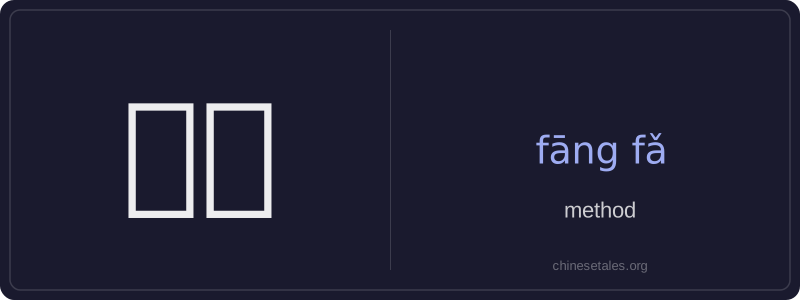
方法 (fāng fǎ) means 'method' or 'way of doing something' — a systematic, practical approach to accomplishing a task. The character 方 (fāng) originally meant 'direction' or 'side', and here conveys the idea of 'approach' or 'orientation'; 法 (fǎ) means 'law', 'rule', or 'principle', suggesting a standardized, reliable procedure. Together, they form a compound noun emphasizing an organized, repeatable technique rather than a random action.
This word is widely used in everyday life — for learning, problem-solving, cooking, studying, or even fixing things. It’s neutral in register, appropriate in both casual and formal contexts, and often appears after measure words like 一 (yī) or with modifiers like 好 (hǎo, 'good') or 简单 (jiǎn dān, 'simple'). Unlike more colloquial terms like 办法 (bàn fǎ), which can imply an ad hoc solution, 方法 suggests intentionality and structure.
Example Sentences
Related Words
见面
见面 literally means 'see face' — combining 见 (t
背后
背后 literally means 'back + behind' and functions
我的
我的 (wǒ de) is a possessive pronoun meaning 'my'
中学
'Zhōngxué' literally combines 'zhōng' (middle)
面条
‘面条’ (miàn tiáo) literally means ‘flour str
后来
Later (hòulái) is an adverb meaning 'afterwards'
在家
'Zài jiā' literally combines the preposition 'z
不对
不对 (bù duì) literally combines 不 (bù), meani