Word Explanation
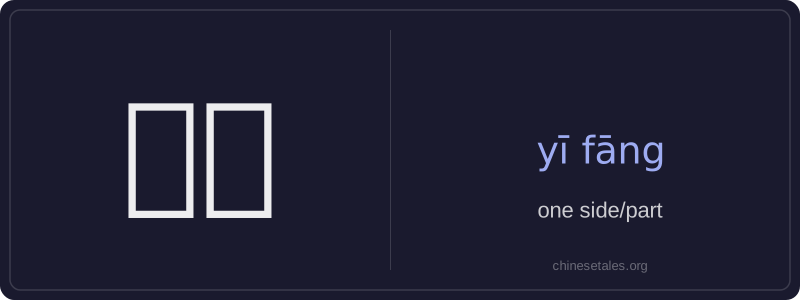
一方 literally means 'one side' or 'one part', combining the numeral 一 (yī, 'one') and the noun 方 (fāng, 'side', 'direction', or 'area'). It refers to a specific region, territory, or party in a relationship or situation — often used in formal, literary, or diplomatic contexts. Unlike simple words for 'place' like 地方 (dìfāng), 一方 carries a sense of boundedness, perspective, or relational positioning: it implies one of at least two identifiable sides or areas.
The term frequently appears in fixed expressions such as 一方水土 (yī fāng shuǐtǔ, 'the land and waters of a place', meaning local environment or culture) or in diplomatic language like 双方 (shuāngfāng, 'both parties'), where 一方 is the counterpart. It can also denote a geographic area with distinctive features — for example, a region known for its cuisine, dialect, or natural scenery — emphasizing uniqueness tied to location rather than administrative boundaries.
Example Sentences
Related Words
见面
见面 literally means 'see face' — combining 见 (t
背后
背后 literally means 'back + behind' and functions
我的
我的 (wǒ de) is a possessive pronoun meaning 'my'
中学
'Zhōngxué' literally combines 'zhōng' (middle)
面条
‘面条’ (miàn tiáo) literally means ‘flour str
后来
Later (hòulái) is an adverb meaning 'afterwards'
在家
'Zài jiā' literally combines the preposition 'z
不对
不对 (bù duì) literally combines 不 (bù), meani