Word Explanation
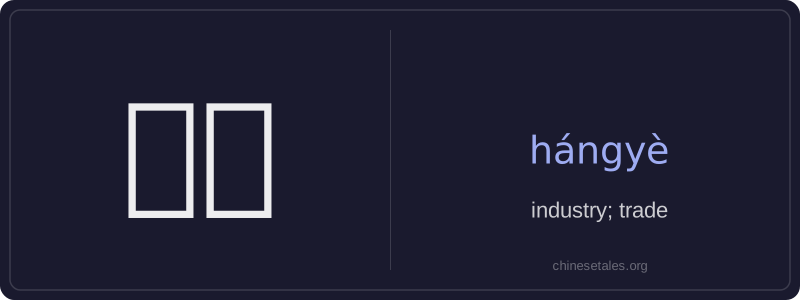
行业 (hángyè) means 'industry' or 'trade' — a broad category of economic activity involving similar types of businesses, products, or services. The first character 行 (háng) originally meant 'a row' or 'a group doing the same thing', and in compound words like this it conveys the sense of a professional domain or guild. The second character 业 (yè) means 'occupation', 'profession', or 'business'. Together, 行业 refers to an organized field of work — for example, the tech industry, education sector, or food service trade. It’s commonly used in formal, professional, or academic contexts when discussing economic structure, career paths, or market analysis.
This word is neutral in register and appears frequently in news, reports, and workplace conversations. Unlike the English word 'industry', 行业 does not imply large-scale manufacturing by default — it applies equally to creative fields (e.g., film industry), service sectors (e.g., tourism industry), or knowledge-based domains (e.g., legal industry). It’s often paired with modifiers like 相关 (related), 发展 (development), or 竞争 (competition) to describe trends or conditions within a given field.
Example Sentences
Related Words
见面
见面 literally means 'see face' — combining 见 (t
背后
背后 literally means 'back + behind' and functions
我的
我的 (wǒ de) is a possessive pronoun meaning 'my'
中学
'Zhōngxué' literally combines 'zhōng' (middle)
面条
‘面条’ (miàn tiáo) literally means ‘flour str
后来
Later (hòulái) is an adverb meaning 'afterwards'
在家
'Zài jiā' literally combines the preposition 'z
不对
不对 (bù duì) literally combines 不 (bù), meani