Word Explanation
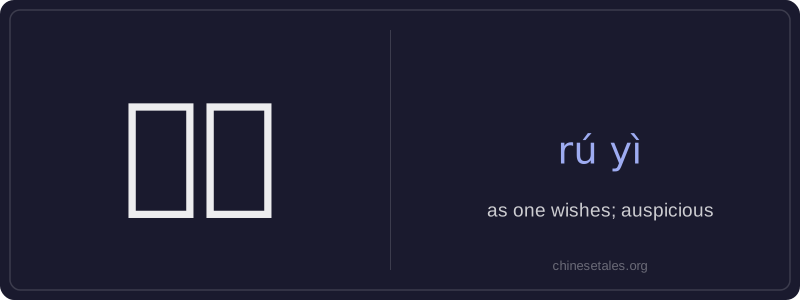
'Rú yì' literally means 'as one wishes' — combining 如 (rú, 'as', 'like') and 意 (yì, 'will', 'intention', 'wish'). Historically, it refers to a ceremonial scepter used in Daoist and Buddhist rituals, often carved from jade or ivory and shaped like a cloud or lingzhi mushroom; its form symbolizes auspiciousness and the fulfillment of desires. Over time, the object became a powerful cultural emblem of good fortune, harmony, and smooth success.
Today, 'rú yì' appears mainly in fixed expressions and compound words (e.g., 万事如意 wànshì rúyì, 'may all things go as you wish'), blessings (especially during Chinese New Year), and decorative motifs — including on porcelain, textiles, and even animal-themed charms (e.g., a bat holding a ruyi scepter, combining 'bat' (fú) and 'ruyi' for double auspiciousness). Though rarely used alone as a standalone noun in daily speech, it carries deep ritual and symbolic weight in traditional contexts.
Example Sentences
Related Words
见面
见面 literally means 'see face' — combining 见 (t
背后
背后 literally means 'back + behind' and functions
我的
我的 (wǒ de) is a possessive pronoun meaning 'my'
中学
'Zhōngxué' literally combines 'zhōng' (middle)
面条
‘面条’ (miàn tiáo) literally means ‘flour str
后来
Later (hòulái) is an adverb meaning 'afterwards'
在家
'Zài jiā' literally combines the preposition 'z
不对
不对 (bù duì) literally combines 不 (bù), meani