Word Explanation
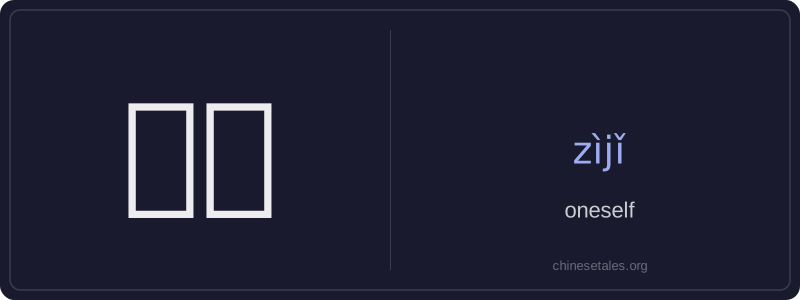
自己 (zìjǐ) is a reflexive pronoun meaning 'oneself' or 'myself/yourself/himself/herself/ourselves/themselves', depending on context. It is not inflected for person or number — the subject determines its reference. The character 自 means 'self' or 'from oneself', and 己 means 'self' or 'one's own body'; together they reinforce the idea of intrinsic, personal agency or identity.
This word is essential for expressing autonomy, personal responsibility, or introspection in daily life — for example, doing something without help ('do it yourself'), thinking independently ('think for yourself'), or emphasizing ownership ('made it myself'). It frequently appears after verbs to indicate that the action reflects back on the subject, and it can also function as an adjective meaning 'own' (e.g., 自己的房间 — 'one's own room'). Unlike English, Chinese does not change form for gender or number, making 自己 highly versatile but requiring careful attention to context to avoid ambiguity.
Example Sentences
Related Words
见面
见面 literally means 'see face' — combining 见 (t
背后
背后 literally means 'back + behind' and functions
我的
我的 (wǒ de) is a possessive pronoun meaning 'my'
中学
'Zhōngxué' literally combines 'zhōng' (middle)
面条
‘面条’ (miàn tiáo) literally means ‘flour str
后来
Later (hòulái) is an adverb meaning 'afterwards'
在家
'Zài jiā' literally combines the preposition 'z
不对
不对 (bù duì) literally combines 不 (bù), meani