Word Explanation
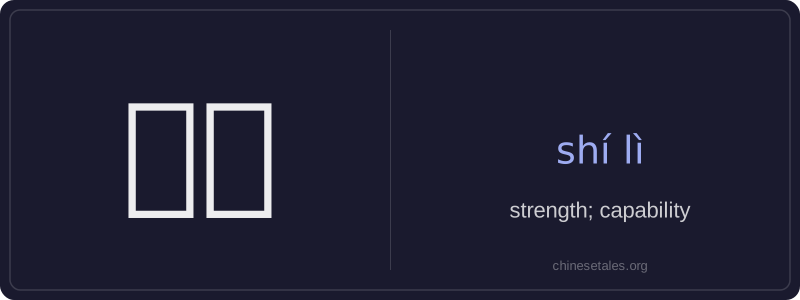
实力 (shí lì) literally combines 实 (shí), meaning 'real' or 'actual', and 力 (lì), meaning 'power' or 'strength'. Together, they form a noun meaning 'real strength' — referring to one’s tangible, measurable capability, competence, or resources in a given domain. Unlike abstract terms like 潜力 (qiánlì, 'potential'), 实力 emphasizes what someone or something *already has* — such as skill, experience, financial backing, or physical power.
This word is commonly used in contexts like education, sports, business, and personal development. You’ll hear it when evaluating performance ('Her English speaking 实力 is impressive'), comparing teams ('The two companies have similar 实力'), or discussing qualifications ('We need to assess the candidate’s technical 实力'). It often appears after possessive markers (e.g., 他的实力) or in phrases like 增强实力 (zēngqiáng shílì, 'to strengthen one’s capabilities') or 实力雄厚 (shílì xiónghòu, 'strong in capability/resources').
Example Sentences
Related Words
见面
见面 literally means 'see face' — combining 见 (t
背后
背后 literally means 'back + behind' and functions
我的
我的 (wǒ de) is a possessive pronoun meaning 'my'
中学
'Zhōngxué' literally combines 'zhōng' (middle)
面条
‘面条’ (miàn tiáo) literally means ‘flour str
后来
Later (hòulái) is an adverb meaning 'afterwards'
在家
'Zài jiā' literally combines the preposition 'z
不对
不对 (bù duì) literally combines 不 (bù), meani