Word Explanation
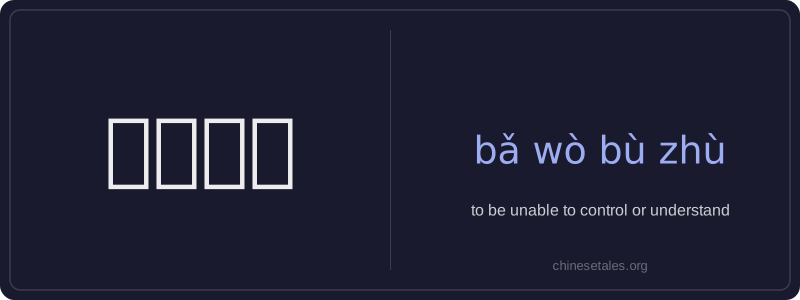
把握不住 literally means 'cannot grasp or hold onto'—combining 把 (to handle), 握 (to grip), 不 (not), and 住 (to hold/stay in place). Figuratively, it describes a state of losing control over a situation, emotion, or concept, or being unable to comprehend or manage something intangible—like feelings, timing, or abstract ideas. It often conveys helplessness, confusion, or instability.
This phrase is commonly used in introspective or emotional contexts: someone might say they 'can’t grasp' their own anxiety, a shifting relationship, or rapidly changing circumstances. Unlike physical inability, 把握不住 emphasizes subjective uncertainty—not lack of skill, but the elusiveness of the thing itself. It’s more common in spoken and literary Chinese than formal writing, and usually appears with subjects like emotions, opportunities, rhythm, or meaning.
Example Sentences
Related Words
见面
见面 literally means 'see face' — combining 见 (t
背后
背后 literally means 'back + behind' and functions
我的
我的 (wǒ de) is a possessive pronoun meaning 'my'
中学
'Zhōngxué' literally combines 'zhōng' (middle)
面条
‘面条’ (miàn tiáo) literally means ‘flour str
后来
Later (hòulái) is an adverb meaning 'afterwards'
在家
'Zài jiā' literally combines the preposition 'z
不对
不对 (bù duì) literally combines 不 (bù), meani