Word Explanation
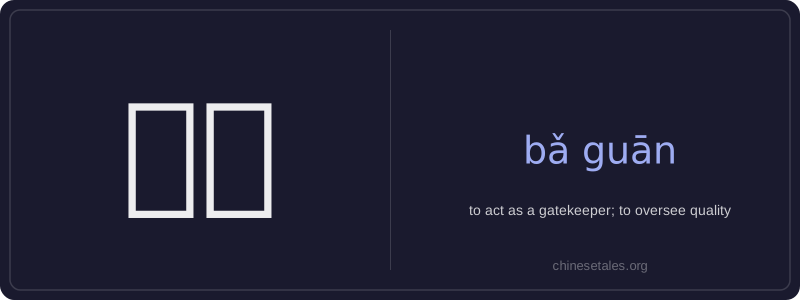
The word 把关 (bǎ guān) literally combines 把 (bǎ), meaning 'to hold' or 'to take control of', and 关 (guān), meaning 'gate' or 'checkpoint'. Together, it evokes the image of someone standing at a gate to inspect, screen, or control what passes through — hence its core meaning: to act as a gatekeeper, to oversee quality, or to ensure standards are met before something is approved or released.
This verb is commonly used in professional, institutional, or technical contexts — such as food safety inspection, editorial review, product testing, or academic peer review. It implies responsibility, authority, and careful scrutiny. While it can be used transitively (e.g., 把关质量), it often appears without an object when the context makes the domain clear (e.g., 质检员负责把关). It carries a formal, responsible tone and is rarely used in casual daily conversation.
Example Sentences
Related Words
见面
见面 literally means 'see face' — combining 见 (t
背后
背后 literally means 'back + behind' and functions
我的
我的 (wǒ de) is a possessive pronoun meaning 'my'
中学
'Zhōngxué' literally combines 'zhōng' (middle)
面条
‘面条’ (miàn tiáo) literally means ‘flour str
后来
Later (hòulái) is an adverb meaning 'afterwards'
在家
'Zài jiā' literally combines the preposition 'z
不对
不对 (bù duì) literally combines 不 (bù), meani