Word Explanation
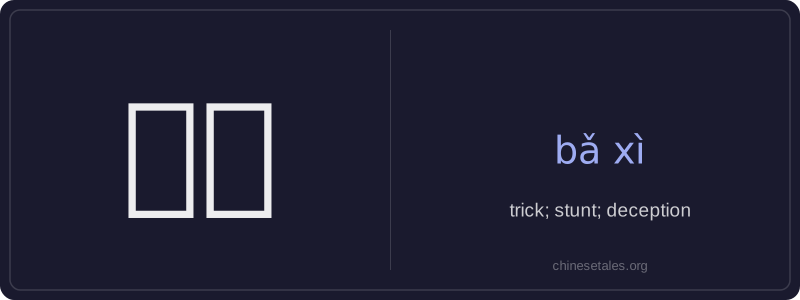
‘把戏’ literally combines 把 (bǎ), a measure word often used for actions or objects handled physically, and 戏 (xì), meaning ‘play’ or ‘drama’. Together, it refers to a staged or deceptive action—like a magician’s trick, a circus stunt, or a cunning ploy. Though originally neutral, it now carries a mildly negative or skeptical connotation, implying something showy but insubstantial or even dishonest.
The term is commonly used in both literal and figurative contexts: describing physical performances (e.g., circus acts) or metaphorical deceptions (e.g., political spin or marketing gimmicks). It’s more colloquial than formal and rarely appears in academic or technical writing. While not inherently vulgar, it often implies criticism—suggesting the ‘trick’ is meant to mislead or distract rather than entertain genuinely.
Example Sentences
Related Words
见面
见面 literally means 'see face' — combining 见 (t
背后
背后 literally means 'back + behind' and functions
我的
我的 (wǒ de) is a possessive pronoun meaning 'my'
中学
'Zhōngxué' literally combines 'zhōng' (middle)
面条
‘面条’ (miàn tiáo) literally means ‘flour str
后来
Later (hòulái) is an adverb meaning 'afterwards'
在家
'Zài jiā' literally combines the preposition 'z
不对
不对 (bù duì) literally combines 不 (bù), meani