Word Explanation
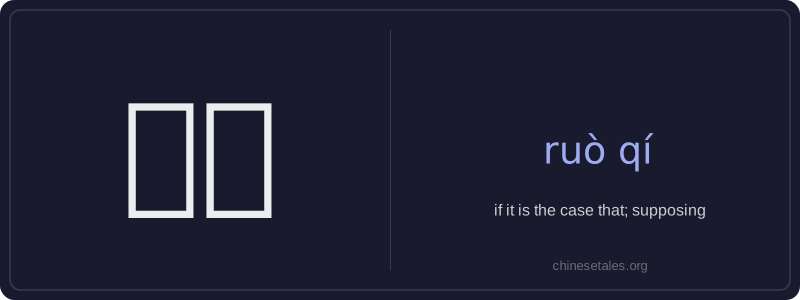
'Ruò qí' is a formal literary conjunction meaning 'if it is the case that' or 'supposing'. It combines the character 若 (ruò), meaning 'if' or 'as if', and 其 (qí), a classical pronoun meaning 'its', 'that', or 'this', which here functions as a grammatical intensifier to reinforce the hypothetical condition. Together, they form a compact, elevated expression used primarily in written Chinese—especially in essays, classical texts, official documents, and formal speeches—to introduce a conditional clause with nuance and gravity.
This phrase is rarely heard in everyday spoken Mandarin; native speakers typically use simpler alternatives like 如果 (rúguǒ) or 假如 (jiǎrú). 'Ruò qí' carries a tone of deliberation and intellectual precision, often appearing before clauses expressing consequence, contrast, or moral reasoning. Its usage signals a high register and presupposes shared understanding of the context being hypothesized—it does not stand alone but always introduces a dependent clause that sets up what follows.
Example Sentences
Related Words
见面
见面 literally means 'see face' — combining 见 (t
背后
背后 literally means 'back + behind' and functions
我的
我的 (wǒ de) is a possessive pronoun meaning 'my'
中学
'Zhōngxué' literally combines 'zhōng' (middle)
面条
‘面条’ (miàn tiáo) literally means ‘flour str
后来
Later (hòulái) is an adverb meaning 'afterwards'
在家
'Zài jiā' literally combines the preposition 'z
不对
不对 (bù duì) literally combines 不 (bù), meani