Word Explanation
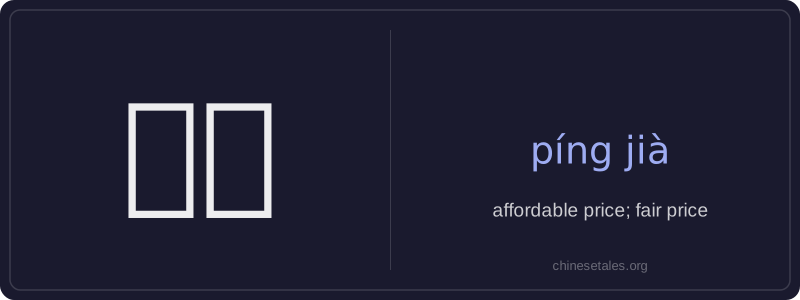
平价 literally means 'flat price' — 平 (píng) conveys 'level,' 'fair,' or 'moderate,' while 价 (jià) means 'price' or 'cost.' Together, 平价 describes a price that is reasonable, fair, and accessible to ordinary people — neither artificially inflated nor suspiciously low. It emphasizes affordability without implying low quality, making it distinct from terms like 'cheap' or 'discounted.'
This term is widely used in daily life: supermarkets often label sections as '平价超市' (affordable supermarkets), pharmacies promote '平价药品' (reasonably priced medicines), and online platforms feature '平价好物' (great-value items). It carries a positive, trustworthy connotation — suggesting fairness, transparency, and social responsibility in pricing. While it can function as a noun ('the store offers 平价'), it’s more commonly used attributively before nouns, like an adjective.
Example Sentences
Related Words
见面
见面 literally means 'see face' — combining 见 (t
背后
背后 literally means 'back + behind' and functions
我的
我的 (wǒ de) is a possessive pronoun meaning 'my'
中学
'Zhōngxué' literally combines 'zhōng' (middle)
面条
‘面条’ (miàn tiáo) literally means ‘flour str
后来
Later (hòulái) is an adverb meaning 'afterwards'
在家
'Zài jiā' literally combines the preposition 'z
不对
不对 (bù duì) literally combines 不 (bù), meani