Word Explanation
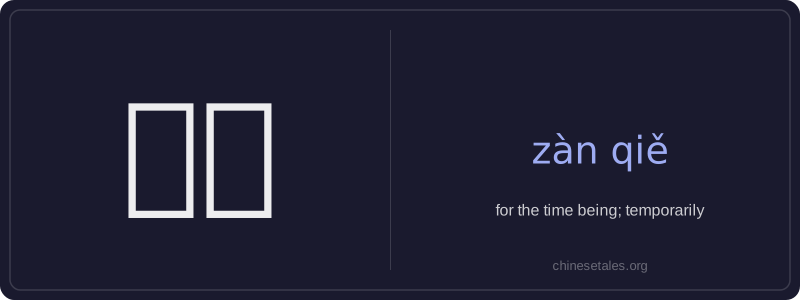
暂且 (zàn qiě) is an adverb meaning 'for the time being' or 'temporarily.' It expresses a provisional, short-term arrangement—something accepted or done now, with the understanding that it may change later. The character 暂 means 'brief' or 'temporary,' while 且 carries a sense of 'for now' or 'in the meantime,' often implying suspension of judgment or action. Together, they form a fixed two-character adverb emphasizing immediacy and impermanence.
This word is commonly used in spoken and written Chinese to soften suggestions, defer decisions, or acknowledge temporary solutions. It often appears at the beginning or middle of a sentence, followed by a verb phrase or clause. 暂且 is neutral in register—not overly formal nor colloquial—and frequently appears in discussions about plans, compromises, or uncertain situations where finality is postponed.
Example Sentences
Related Words
见面
见面 literally means 'see face' — combining 见 (t
背后
背后 literally means 'back + behind' and functions
我的
我的 (wǒ de) is a possessive pronoun meaning 'my'
中学
'Zhōngxué' literally combines 'zhōng' (middle)
面条
‘面条’ (miàn tiáo) literally means ‘flour str
后来
Later (hòulái) is an adverb meaning 'afterwards'
在家
'Zài jiā' literally combines the preposition 'z
不对
不对 (bù duì) literally combines 不 (bù), meani