Word Explanation
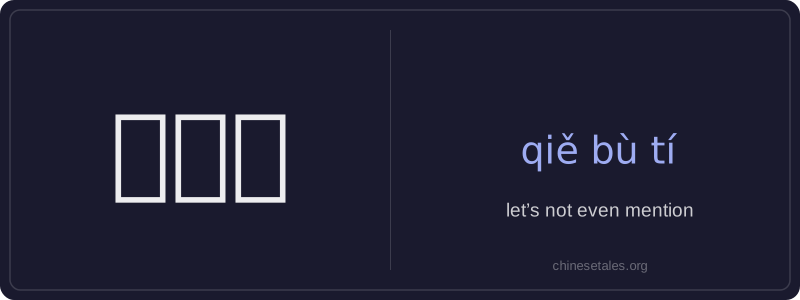
'且不提' is a conjunction meaning 'let’s not even mention' or 'to say nothing of'. It functions as a discourse marker to set aside a point—often something obvious, overwhelming, or too negative to dwell on—before shifting focus to a more central or manageable issue. The character 且 means 'moreover' or 'besides', 不 is the standard negation particle, and 提 means 'to bring up' or 'to mention'. Together, they form an idiomatic phrase indicating deliberate omission for rhetorical effect.
This expression is commonly used in spoken and written Chinese to downplay a secondary concern while highlighting a primary one. It often appears at the beginning of a sentence or clause, followed by a comma, and is especially frequent in comparisons, complaints, or persuasive speech. Though formal-sounding, it’s widely used in everyday conversation among educated speakers—not overly literary, but slightly more polished than casual alternatives like 别说.
Example Sentences
Related Words
见面
见面 literally means 'see face' — combining 见 (t
背后
背后 literally means 'back + behind' and functions
我的
我的 (wǒ de) is a possessive pronoun meaning 'my'
中学
'Zhōngxué' literally combines 'zhōng' (middle)
面条
‘面条’ (miàn tiáo) literally means ‘flour str
后来
Later (hòulái) is an adverb meaning 'afterwards'
在家
'Zài jiā' literally combines the preposition 'z
不对
不对 (bù duì) literally combines 不 (bù), meani