Word Explanation
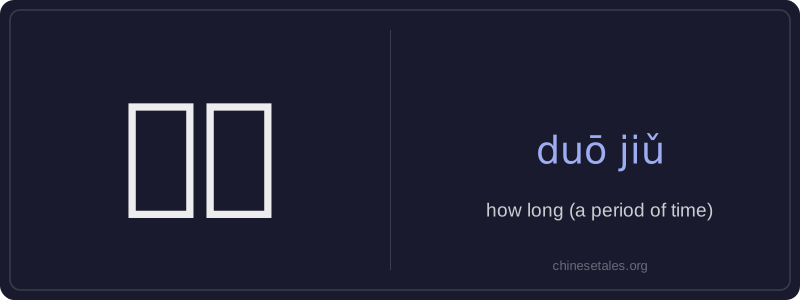
‘多久’ (duō jiǔ) is an interrogative adverb meaning ‘how long’ — used to ask about the duration of a period of time. It combines 多 (duō), meaning ‘how much/many’, and 久 (jiǔ), meaning ‘long (in time)’ or ‘for a long time’. Together, they form a fixed phrase that functions as a time question word, always appearing at the beginning or middle of a question before the verb or predicate.
This phrase is commonly used in everyday spoken and written Chinese to inquire about lengths of time — such as how long someone has lived somewhere, how long an activity lasted, or how long something will take. It does not stand alone as a noun; it must be part of a question structure and is never used in affirmative statements. Unlike ‘多长时间’ (duō cháng shíjiān), which is more formal and explicit, ‘多久’ is concise and conversational, making it especially frequent in informal dialogue and beginner-level interactions.
Example Sentences
Related Words
见面
见面 literally means 'see face' — combining 见 (t
背后
背后 literally means 'back + behind' and functions
我的
我的 (wǒ de) is a possessive pronoun meaning 'my'
中学
'Zhōngxué' literally combines 'zhōng' (middle)
面条
‘面条’ (miàn tiáo) literally means ‘flour str
后来
Later (hòulái) is an adverb meaning 'afterwards'
在家
'Zài jiā' literally combines the preposition 'z
不对
不对 (bù duì) literally combines 不 (bù), meani