Word Explanation
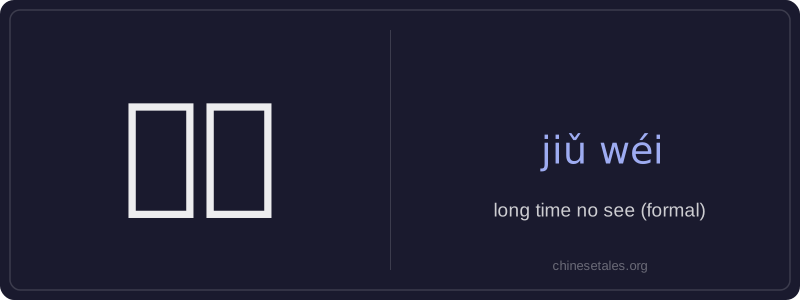
‘久违’ literally means ‘long separation’—‘久’ (jiǔ) means ‘long time’ and ‘违’ (wéi) means ‘to be apart from’ or ‘to depart from.’ Together, they form a formal, respectful expression used when greeting someone you haven’t seen in a long time. It conveys warmth and courtesy, often implying mutual respect and shared history.
This phrase is commonly used in spoken and written Chinese among adults—especially in professional, academic, or elder-respect contexts—and is rarely used among close friends or children, who would say ‘好久不见’ instead. It’s frequently heard at reunions, conferences, or when meeting former teachers, colleagues, or distant relatives. Though grammatically a noun or interjection, it functions as a complete greeting phrase and is almost always followed by a pause or a smile—not a verb.
Example Sentences
Related Words
见面
见面 literally means 'see face' — combining 见 (t
背后
背后 literally means 'back + behind' and functions
我的
我的 (wǒ de) is a possessive pronoun meaning 'my'
中学
'Zhōngxué' literally combines 'zhōng' (middle)
面条
‘面条’ (miàn tiáo) literally means ‘flour str
后来
Later (hòulái) is an adverb meaning 'afterwards'
在家
'Zài jiā' literally combines the preposition 'z
不对
不对 (bù duì) literally combines 不 (bù), meani