Word Explanation
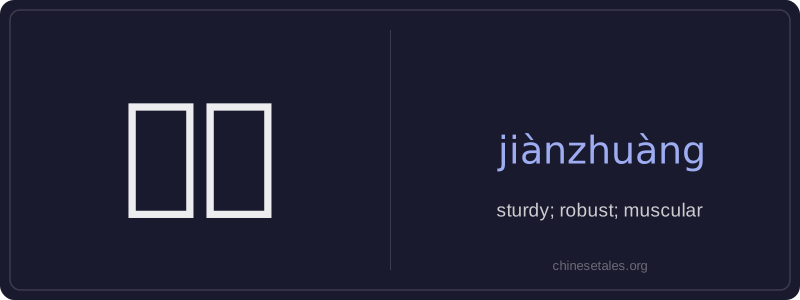
健壮 (jiànzhuàng) is an adjective meaning 'sturdy', 'robust', or 'muscular' — describing someone or something with strong physical health, solid build, and energetic vitality. The first character 健 (jiàn) means 'healthy' or 'fit', emphasizing soundness of body or function; the second character 壮 (zhuàng) means 'strong', 'stout', or 'vigorous', often implying physical power or maturity. Together, they form a compound that conveys holistic physical strength — not just muscle mass, but resilience, endurance, and good constitution.
This word is commonly used to describe people (especially children, athletes, or elders who remain active), animals (like livestock or working dogs), or even plants and infrastructure in metaphorical contexts (e.g., 'a健壮 sapling'). It carries a positive, commendatory tone and is more formal and literary than colloquial alternatives like 结实 (jiēshi). It rarely describes inanimate objects unless figuratively — for instance, a '健壮 economy' implies stability and growth potential.
Example Sentences
Related Words
见面
见面 literally means 'see face' — combining 见 (t
背后
背后 literally means 'back + behind' and functions
我的
我的 (wǒ de) is a possessive pronoun meaning 'my'
中学
'Zhōngxué' literally combines 'zhōng' (middle)
面条
‘面条’ (miàn tiáo) literally means ‘flour str
后来
Later (hòulái) is an adverb meaning 'afterwards'
在家
'Zài jiā' literally combines the preposition 'z
不对
不对 (bù duì) literally combines 不 (bù), meani