Word Explanation
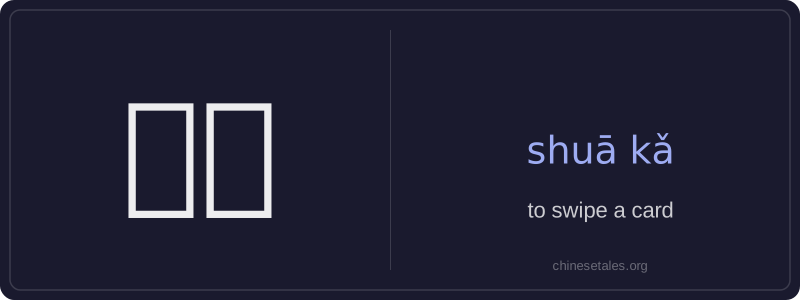
'Shuā kǎ' literally combines 'shuā' (to swipe, brush) and 'kǎ' (card), describing the physical action of swiping a magnetic stripe card or tapping a contactless card to authorize a payment or gain access. It is commonly used in everyday transactions — at supermarkets, restaurants, metro gates, or office entry systems — and reflects modern digital lifestyle habits in urban China.
Though originally tied to magnetic cards, the term has expanded colloquially to include contactless 'tap-to-pay' actions using bank cards, transit cards, or even smartphones with NFC enabled. It is neutral in register — appropriate in both spoken and written contexts — and almost always functions as a verb, typically appearing after a subject and before an object (e.g., 'I swipe my card') or as a standalone verb phrase (e.g., 'Please swipe your card').
Example Sentences
Related Words
见面
见面 literally means 'see face' — combining 见 (t
背后
背后 literally means 'back + behind' and functions
我的
我的 (wǒ de) is a possessive pronoun meaning 'my'
中学
'Zhōngxué' literally combines 'zhōng' (middle)
面条
‘面条’ (miàn tiáo) literally means ‘flour str
后来
Later (hòulái) is an adverb meaning 'afterwards'
在家
'Zài jiā' literally combines the preposition 'z
不对
不对 (bù duì) literally combines 不 (bù), meani