Word Explanation
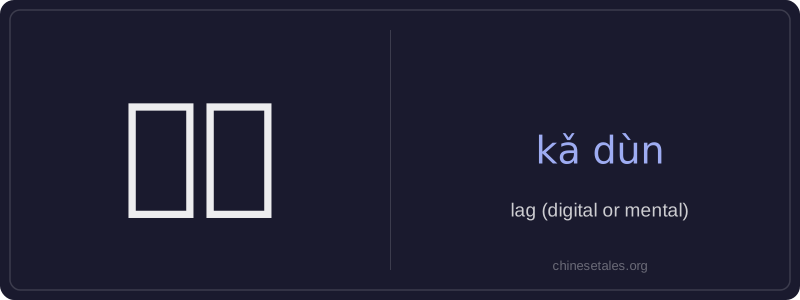
‘卡顿’ (kǎ dùn) is a noun describing a brief, disruptive interruption in smooth operation — most commonly used for digital lag (e.g., frozen video, unresponsive apps) but also extended to mental sluggishness, like a sudden pause in speech or thought. The character 卡 (kǎ) literally means 'to get stuck' or 'to jam', while 顿 (dùn) conveys a sudden stop or pause — together they vividly evoke the sensation of motion halting abruptly. It’s widely used in tech contexts among Chinese speakers, especially when describing smartphone, gaming, or streaming issues.
Unlike formal technical terms like ‘latency’, 卡顿 is colloquial and conversational — you’ll hear it in daily chats, online forums, and customer service. It can be modified by degree words (e.g., 有点卡顿, 非常卡顿) and often appears after verbs like 感觉 (feel), 出现 (occur), or 有 (have). Though originally tech-related, younger speakers increasingly use it metaphorically for cognitive fatigue or emotional hesitation — e.g., ‘大脑卡顿’ (brain lag) during stress.
Example Sentences
Related Words
背后
背后 literally means 'back + behind' and functions
见面
见面 literally means 'see face' — combining 见 (t
面条
‘面条’ (miàn tiáo) literally means ‘flour str
我的
我的 (wǒ de) is a possessive pronoun meaning 'my'
中学
'Zhōngxué' literally combines 'zhōng' (middle)
后来
Later (hòulái) is an adverb meaning 'afterwards'
在家
'Zài jiā' literally combines the preposition 'z
不对
不对 (bù duì) literally combines 不 (bù), meani