Word Explanation
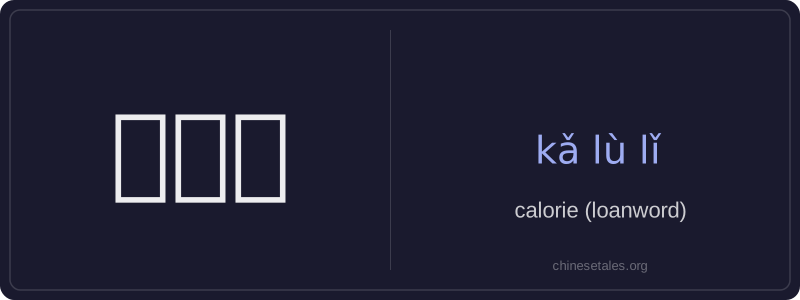
‘卡路里’ is a phonetic loanword from the English ‘calorie’, used in Chinese to refer to the unit of energy found in food and expended through physical activity. Though the characters 卡, 路, and 里 each have independent meanings (e.g., ‘card’, ‘road’, ‘mile’), here they function purely as sound symbols—none contributes semantic meaning to the word. This is common with transliterated scientific or technical terms in modern Chinese.
The term is widely used in health, nutrition, and fitness contexts—on food packaging, diet plans, fitness apps, and medical advice. It’s pronounced with third tone on 卡, fourth tone on 路, and third tone on 里 (kǎ lù lǐ), and is almost always written in simplified characters. While ‘千卡’ (qiān kǎ, kilocalorie) is more precise for dietary energy, ‘卡路里’ remains the everyday term understood by most speakers across age groups and regions.
Example Sentences
Related Words
背后
背后 literally means 'back + behind' and functions
见面
见面 literally means 'see face' — combining 见 (t
面条
‘面条’ (miàn tiáo) literally means ‘flour str
我的
我的 (wǒ de) is a possessive pronoun meaning 'my'
中学
'Zhōngxué' literally combines 'zhōng' (middle)
后来
Later (hòulái) is an adverb meaning 'afterwards'
在家
'Zài jiā' literally combines the preposition 'z
不对
不对 (bù duì) literally combines 不 (bù), meani