Word Explanation
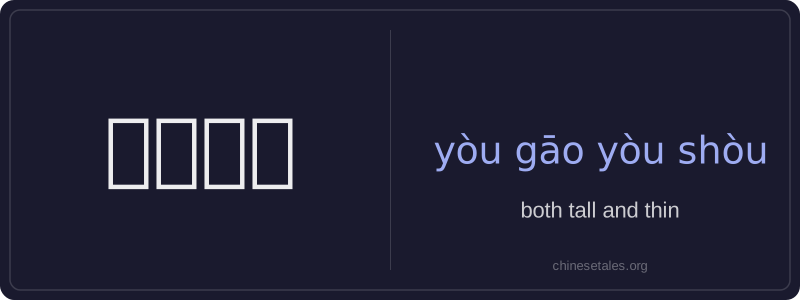
‘又高又瘦’ is a common Chinese correlative structure meaning 'both tall and thin'. It uses the repeating conjunction '又...又...' to link two adjectives describing simultaneous, often complementary physical traits. The pattern emphasizes that both qualities are present at once—not just one or the other—and carries a neutral to slightly descriptive or observational tone. It’s frequently used in everyday speech and writing when describing people’s appearance, especially in informal contexts like conversations about friends, characters in stories, or physical descriptions in profiles.
This phrase typically modifies nouns directly (e.g., 他是个又高又瘦的男生) and cannot stand alone as a noun or verb. Unlike English, Chinese doesn’t require articles or plural markers here—context supplies number and definiteness. While it most often describes people, it may occasionally apply to animals or objects (e.g., a slender tree or a lanky dog), though human usage dominates.
Example Sentences
Related Words
背后
背后 literally means 'back + behind' and functions
见面
见面 literally means 'see face' — combining 见 (t
面条
‘面条’ (miàn tiáo) literally means ‘flour str
我的
我的 (wǒ de) is a possessive pronoun meaning 'my'
中学
'Zhōngxué' literally combines 'zhōng' (middle)
后来
Later (hòulái) is an adverb meaning 'afterwards'
在家
'Zài jiā' literally combines the preposition 'z
不对
不对 (bù duì) literally combines 不 (bù), meani