Word Explanation
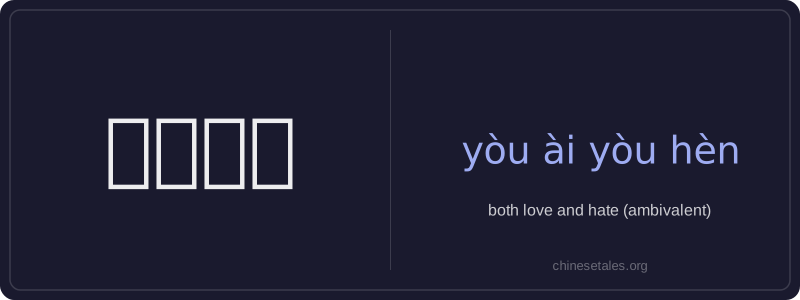
‘又爱又恨’ is an idiomatic four-character expression describing intense emotional ambivalence—simultaneously feeling deep affection and strong resentment toward the same person, thing, or situation. Literally, it combines two parallel structures: ‘又…又…’ (‘both… and…’) with the contrasting verbs 爱 (to love) and 恨 (to hate). This structure emphasizes the coexistence and tension of opposing emotions, not a simple mixture but a conflicted, often exhausting duality.
The phrase is commonly used in informal speech and writing to describe complex interpersonal relationships—such as with a difficult yet charismatic boss, a charming but unreliable partner, or even beloved cultural phenomena with problematic aspects (e.g., a nostalgic TV show with outdated values). It conveys psychological realism rather than logical contradiction, and often carries a tone of resignation, irony, or wry self-awareness. While grammatically adjectival, it functions predicatively or attributively, typically following 是 or serving as a predicate after a subject.
Example Sentences
Related Words
背后
背后 literally means 'back + behind' and functions
见面
见面 literally means 'see face' — combining 见 (t
面条
‘面条’ (miàn tiáo) literally means ‘flour str
我的
我的 (wǒ de) is a possessive pronoun meaning 'my'
中学
'Zhōngxué' literally combines 'zhōng' (middle)
后来
Later (hòulái) is an adverb meaning 'afterwards'
在家
'Zài jiā' literally combines the preposition 'z
不对
不对 (bù duì) literally combines 不 (bù), meani