Word Explanation
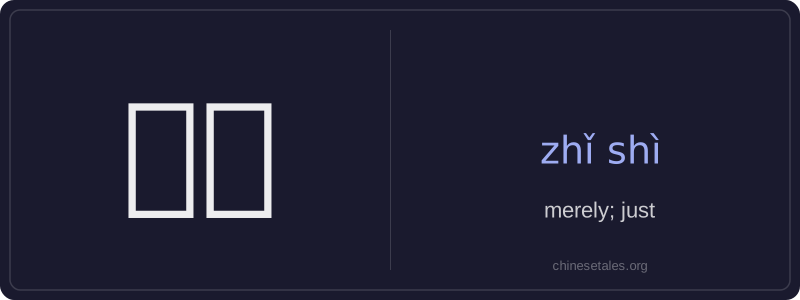
只是 is a common two-character conjunction or adverb meaning 'merely', 'just', or 'nothing more than'. It combines 只 (zhǐ), meaning 'only' or 'just', and 是 (shì), meaning 'to be'—together, they function as a fixed expression emphasizing limitation or understatement. Unlike the verb 是 alone, 只是 does not assert identity but rather downplays significance, intention, or scope. It often appears at the beginning or middle of a sentence to soften statements, express modesty, or clarify that something is not as serious, complex, or consequential as it might seem.
This word frequently occurs in spoken and written Chinese to convey humility, reassurance, or gentle correction. For example, when apologizing or explaining, speakers use 只是 to signal that an action was minor or unintentional. It can also introduce a contrastive clause (e.g., 'It’s just…, not…'), making it useful for nuanced, polite communication. Note that it is never used before nouns as a determiner—unlike English 'just', it doesn’t modify nouns directly but modifies verbs, adjectives, or entire clauses.
Example Sentences
Related Words
背后
背后 literally means 'back + behind' and functions
见面
见面 literally means 'see face' — combining 见 (t
面条
‘面条’ (miàn tiáo) literally means ‘flour str
我的
我的 (wǒ de) is a possessive pronoun meaning 'my'
中学
'Zhōngxué' literally combines 'zhōng' (middle)
后来
Later (hòulái) is an adverb meaning 'afterwards'
在家
'Zài jiā' literally combines the preposition 'z
不对
不对 (bù duì) literally combines 不 (bù), meani