Word Explanation
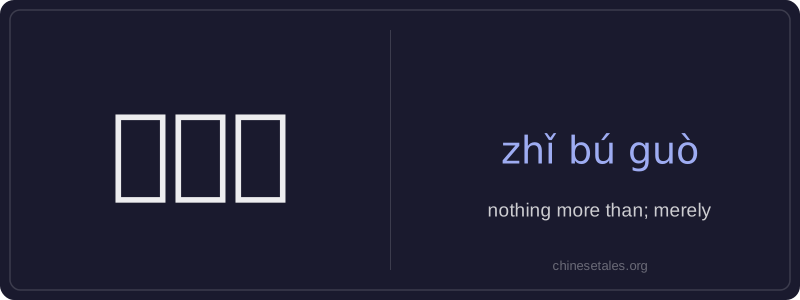
‘只不过’ is an adverbial phrase meaning ‘nothing more than’ or ‘merely,’ used to downplay or minimize the significance, size, importance, or extent of something. Literally, 只 means ‘only,’ 不 means ‘not,’ and 过 is a verb meaning ‘to pass’ or ‘to exceed’—so together, the phrase conveys the idea of ‘not even passing (beyond)’ something, i.e., staying strictly within a modest limit.
It often appears before nouns, verbs, or adjective phrases to soften statements, express humility, or contrast expectations with reality. It’s common in spoken and written Mandarin, especially in explanations, apologies, or reassurances. Unlike stronger modifiers like 完全 or 根本, ‘只不过’ carries a gentle, understated tone—never sarcastic or dismissive unless context clearly signals irony.
Example Sentences
Related Words
背后
背后 literally means 'back + behind' and functions
见面
见面 literally means 'see face' — combining 见 (t
面条
‘面条’ (miàn tiáo) literally means ‘flour str
我的
我的 (wǒ de) is a possessive pronoun meaning 'my'
中学
'Zhōngxué' literally combines 'zhōng' (middle)
后来
Later (hòulái) is an adverb meaning 'afterwards'
在家
'Zài jiā' literally combines the preposition 'z
不对
不对 (bù duì) literally combines 不 (bù), meani