Word Explanation
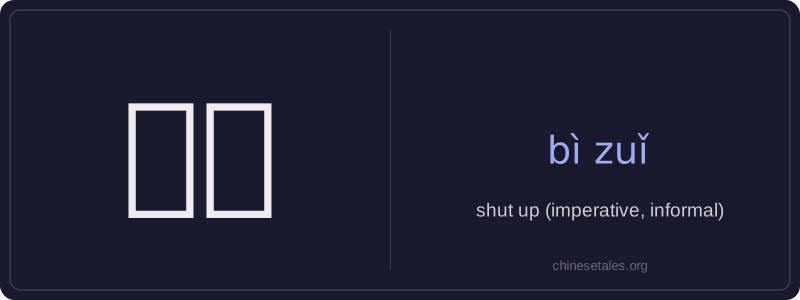
'Bì zuǐ' literally means 'close mouth' — 闭 (bì) means 'to close' or 'to shut', and 嘴 (zuǐ) means 'mouth'. Together, they form an imperative verb phrase meaning 'shut up', used to tell someone abruptly to stop talking. It’s informal, direct, and often carries impatience, annoyance, or urgency — never appropriate in formal, polite, or respectful contexts (e.g., with elders, superiors, or strangers).
This expression is commonly heard in heated arguments, among close friends teasing each other, or when someone is speaking out of turn or at an inappropriate time. While it conveys strong emotion, overuse can sound rude or aggressive. Unlike more neutral alternatives like '请安静' (qǐng ānjìng, 'please be quiet'), 'bì zuǐ' expresses a command rather than a request — the speaker assumes authority or familiarity with the listener.
Example Sentences
Related Words
背后
背后 literally means 'back + behind' and functions
见面
见面 literally means 'see face' — combining 见 (t
面条
‘面条’ (miàn tiáo) literally means ‘flour str
我的
我的 (wǒ de) is a possessive pronoun meaning 'my'
中学
'Zhōngxué' literally combines 'zhōng' (middle)
后来
Later (hòulái) is an adverb meaning 'afterwards'
在家
'Zài jiā' literally combines the preposition 'z
不对
不对 (bù duì) literally combines 不 (bù), meani