Word Explanation
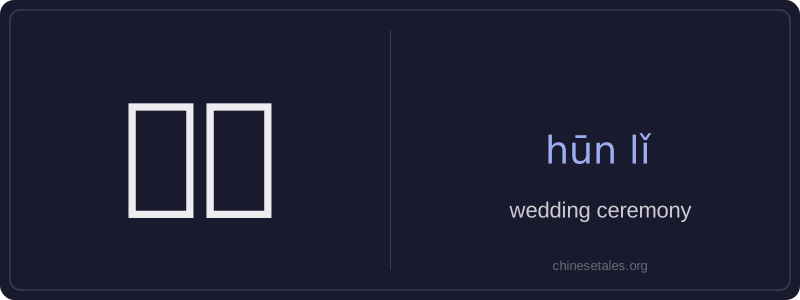
婚礼 (hūn lǐ) literally combines 婚 (hūn), meaning 'marriage' or 'wedding', and 礼 (lǐ), meaning 'ceremony', 'ritual', or 'rite'. Together, they refer specifically to the formal ceremony in which two people are married — not the legal registration (which is called 结婚登记, jiéhūn dēngjì), but the celebratory event with family, friends, rituals, music, food, and symbolic acts like exchanging rings or bowing to elders.
This word is used broadly across modern Chinese-speaking communities for both traditional and contemporary weddings. It appears in invitations, news reports, personal stories, and planning contexts (e.g., '筹备婚礼' — preparing for the wedding). While it carries cultural weight — especially regarding customs like the tea ceremony or red decor — it’s a neutral, standard term appropriate in both spoken and written language, from casual conversation to formal announcements.
Example Sentences
Related Words
背后
背后 literally means 'back + behind' and functions
中学
'Zhōngxué' literally combines 'zhōng' (middle)
见面
见面 literally means 'see face' — combining 见 (t
面条
‘面条’ (miàn tiáo) literally means ‘flour str
我的
我的 (wǒ de) is a possessive pronoun meaning 'my'
不对
不对 (bù duì) literally combines 不 (bù), meani
后来
Later (hòulái) is an adverb meaning 'afterwards'
在家
'Zài jiā' literally combines the preposition 'z