Word Explanation
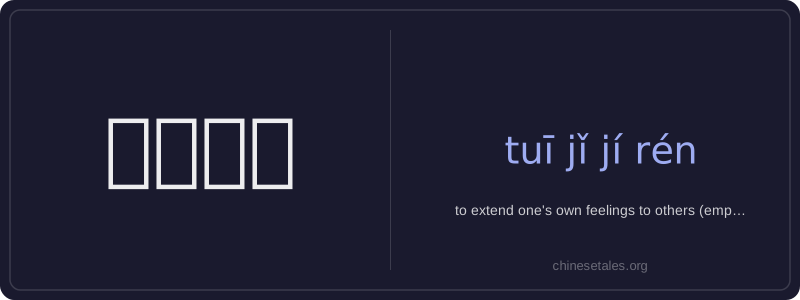
‘推己及人’ is a classical Chinese idiom meaning ‘to extend one’s own feelings to others’—essentially the philosophical foundation of empathy. Literally, 推 (tuī) means ‘to push or extend,’ 己 (jǐ) means ‘oneself,’ 及 (jí) means ‘to reach or extend to,’ and 人 (rén) means ‘others.’ Together, the phrase describes the moral practice of imagining how you would feel in another person’s situation, then acting accordingly with kindness and fairness.
This concept originates from Confucian ethics, especially the Analects, where it reflects the ideal of benevolent conduct grounded in self-reflection. It’s commonly used in discussions about morality, leadership, education, and interpersonal relationships—not as everyday slang, but in thoughtful, reflective, or formal contexts such as essays, speeches, or ethical guidance.
Example Sentences
Related Words
背后
背后 literally means 'back + behind' and functions
中学
'Zhōngxué' literally combines 'zhōng' (middle)
见面
见面 literally means 'see face' — combining 见 (t
面条
‘面条’ (miàn tiáo) literally means ‘flour str
我的
我的 (wǒ de) is a possessive pronoun meaning 'my'
不对
不对 (bù duì) literally combines 不 (bù), meani
后来
Later (hòulái) is an adverb meaning 'afterwards'
在家
'Zài jiā' literally combines the preposition 'z