Word Explanation
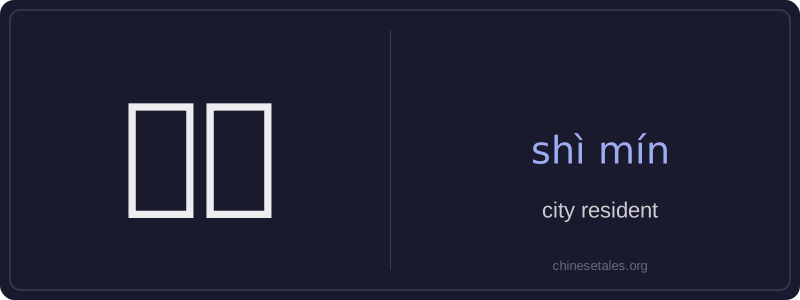
‘市民’ literally combines ‘市’ (shì), meaning ‘city’ or ‘urban area’, and ‘民’ (mín), meaning ‘people’ or ‘citizen’. Together, it refers specifically to a resident of a city — someone who lives in an urban administrative area, often with implications of civic identity, rights, and responsibilities. Unlike the broader term ‘居民’ (jūmín, ‘resident’) which applies to any location, ‘市民’ emphasizes urban belonging and is commonly used in official, media, and everyday contexts when discussing city life, public services, or community matters.
The word carries a neutral-to-positive connotation and is frequently seen in phrases like ‘市民素质’ (shìmín sùzhì, ‘civic literacy’) or ‘市民中心’ (shìmín zhōngxīn, ‘community center’). It does not imply legal citizenship status (like ‘公民’ gōngmín), but rather residency and participation in city-based social life. It’s widely applicable across mainland China, Taiwan, and other Mandarin-speaking regions, though usage frequency may vary by local administrative terminology.
Example Sentences
Related Words
背后
背后 literally means 'back + behind' and functions
中学
'Zhōngxué' literally combines 'zhōng' (middle)
见面
见面 literally means 'see face' — combining 见 (t
面条
‘面条’ (miàn tiáo) literally means ‘flour str
我的
我的 (wǒ de) is a possessive pronoun meaning 'my'
不对
不对 (bù duì) literally combines 不 (bù), meani
后来
Later (hòulái) is an adverb meaning 'afterwards'
在家
'Zài jiā' literally combines the preposition 'z