Word Explanation
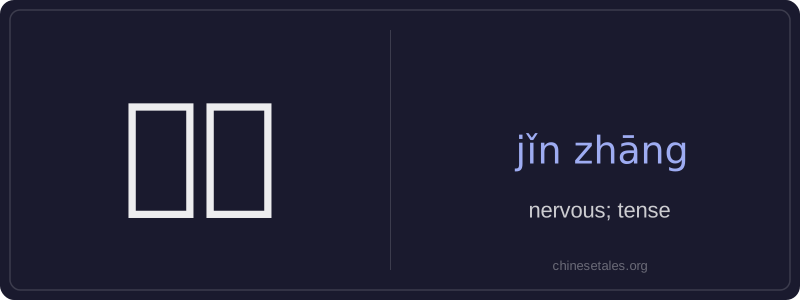
紧张 (jǐn zhāng) is an adjective meaning 'nervous' or 'tense', describing a state of mental or physical strain—often before an important event like an exam, performance, or interview. The first character 紧 (jǐn) means 'tight' or 'taut', suggesting constriction; the second character 张 (zhāng) means 'to stretch' or 'to expand', evoking heightened alertness or arousal. Together, they vividly convey the physical and psychological sensation of being wound up—like a tightly stretched string.
This word is commonly used to describe emotional states in everyday speech and writing, especially in contexts involving pressure, uncertainty, or anticipation. It can modify nouns (e.g., 紧张的情绪 'a nervous mood') or function predicatively (e.g., 我很紧张 'I’m nervous'). While it may occasionally refer to physical tightness (e.g., 肌肉紧张 'muscle tension'), its primary use is emotional—and it’s rarely used for objects or abstract systems without human involvement.
Example Sentences
Related Words
背后
背后 literally means 'back + behind' and functions
中学
'Zhōngxué' literally combines 'zhōng' (middle)
见面
见面 literally means 'see face' — combining 见 (t
面条
‘面条’ (miàn tiáo) literally means ‘flour str
我的
我的 (wǒ de) is a possessive pronoun meaning 'my'
不对
不对 (bù duì) literally combines 不 (bù), meani
后来
Later (hòulái) is an adverb meaning 'afterwards'
在家
'Zài jiā' literally combines the preposition 'z