Word Explanation
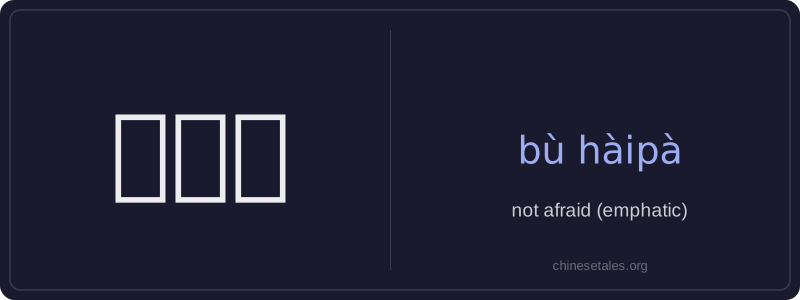
'Bù hàipà' literally combines 'bù' (not), 'hài' (to harm or cause), and 'pà' (to fear) — together meaning 'not afraid'. Though the characters suggest 'not causing fear', the phrase functions idiomatically as an emphatic, colloquial adjective meaning 'unafraid' or 'not at all afraid'. It’s stronger and more expressive than simply 'bù pà', often used to reassure, encourage, or describe steady courage in everyday speech.
This phrase appears frequently in spoken Chinese when comforting children, describing confident behavior, or expressing personal resolve. It’s not formal or literary — you’ll rarely see it in academic writing, but it’s very common in conversations, parenting, storytelling, and motivational contexts. The emphasis falls on the whole phrase, not individual characters, and it typically modifies nouns or follows subjects directly (e.g., '他不害怕' — 'He is not afraid').
Example Sentences
Related Words
背后
背后 literally means 'back + behind' and functions
中学
'Zhōngxué' literally combines 'zhōng' (middle)
见面
见面 literally means 'see face' — combining 见 (t
面条
‘面条’ (miàn tiáo) literally means ‘flour str
我的
我的 (wǒ de) is a possessive pronoun meaning 'my'
不对
不对 (bù duì) literally combines 不 (bù), meani
后来
Later (hòulái) is an adverb meaning 'afterwards'
在家
'Zài jiā' literally combines the preposition 'z