Word Explanation
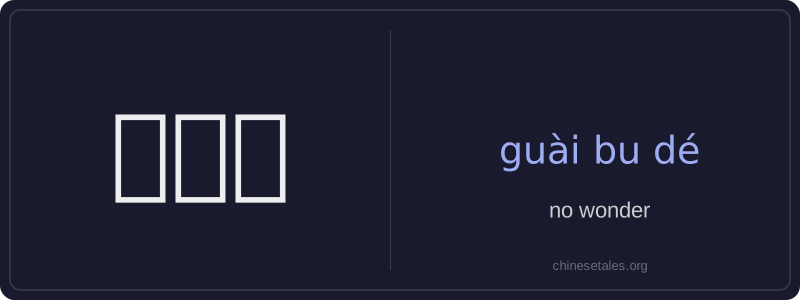
怪不得 (guài bu dé) is a fixed expression meaning 'no wonder' or 'that explains it.' Literally, 怪 means 'to blame' or 'strange,' 不 is the negative particle 'not,' and 得 (pronounced 'de' here, not 'dé') functions as a structural particle indicating possibility or result. Together, the phrase conveys that something is perfectly understandable or unsurprising given prior information — it signals a logical conclusion drawn from new evidence or a sudden realization. It often appears at the beginning of a sentence or clause, followed by an explanation or observation.
This expression is common in spoken and informal written Chinese, especially when reacting to newly learned facts that clarify earlier confusion. It carries a mild tone of recognition or relief, never sarcasm or criticism. Unlike standalone adverbs, 怪不得 always depends on context: the 'reason' it explains must be either stated immediately after or clearly implied by the situation. It’s frequently used in conversations about personal experiences, everyday observations, or emotional reactions.
Example Sentences
Related Words
背后
背后 literally means 'back + behind' and functions
中学
'Zhōngxué' literally combines 'zhōng' (middle)
见面
见面 literally means 'see face' — combining 见 (t
面条
‘面条’ (miàn tiáo) literally means ‘flour str
我的
我的 (wǒ de) is a possessive pronoun meaning 'my'
不对
不对 (bù duì) literally combines 不 (bù), meani
后来
Later (hòulái) is an adverb meaning 'afterwards'
在家
'Zài jiā' literally combines the preposition 'z