Word Explanation
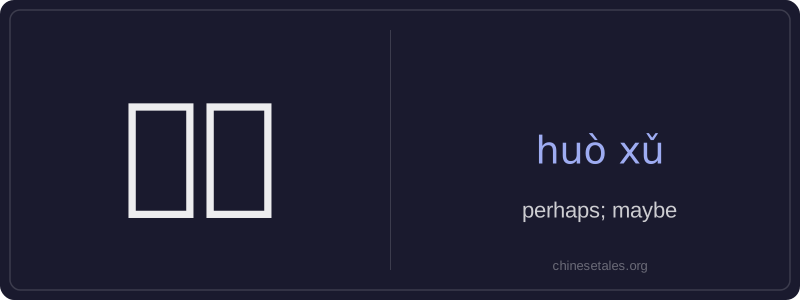
或许 is an adverb meaning 'perhaps' or 'maybe', expressing uncertainty or possibility about something. It’s composed of two characters: 或 (huò), which means 'or' or 'possibly', and 许 (xǔ), which can mean 'to permit' or 'to allow' — together, they convey the sense of 'it may be allowed to happen' or 'it could possibly be the case'. This word is neutral in register and commonly used in both spoken and written Chinese.
Unlike stronger modal words like 肯定 (definitely) or 一定 (certainly), 或许 signals mild doubt or open-ended speculation. It typically appears at the beginning of a clause or sentence, before the verb or predicate, and is often followed by a comma in formal writing. It’s frequently used when making polite suggestions, softening predictions, or expressing tentative agreement — for example, when responding to someone’s plan or hypothesis without committing fully.
Example Sentences
Related Words
背后
背后 literally means 'back + behind' and functions
中学
'Zhōngxué' literally combines 'zhōng' (middle)
见面
见面 literally means 'see face' — combining 见 (t
面条
‘面条’ (miàn tiáo) literally means ‘flour str
我的
我的 (wǒ de) is a possessive pronoun meaning 'my'
不对
不对 (bù duì) literally combines 不 (bù), meani
后来
Later (hòulái) is an adverb meaning 'afterwards'
在家
'Zài jiā' literally combines the preposition 'z