Word Explanation
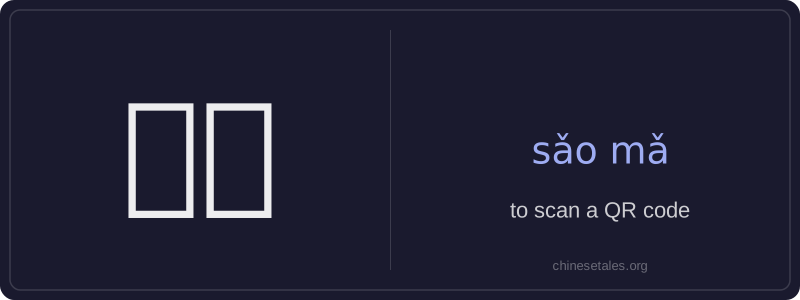
"扫码" literally means "to sweep a code," where 扫 (sǎo) means "to sweep" or "to scan," and 码 (mǎ) means "code"—specifically referring to QR codes (quick response codes) in modern usage. Though 扫 can imply physical sweeping, here it functions metaphorically to mean "to read electronically using a camera or sensor." The term emerged with the widespread adoption of mobile payment systems in China and is now deeply embedded in daily life.
You'll encounter "扫码" at restaurants (to order or pay), subway gates (for digital tickets), museum exhibits (for audio guides), and even street vendor stalls. It's almost always used as a verb in imperative or descriptive constructions—often followed by an object like 微信 (WeChat) or 支付宝 (Alipay), or a location like 这里 (here). Unlike formal terms such as "扫描二维码," 扫码 is colloquial, concise, and universally understood across age groups.
Example Sentences
Related Words
背后
背后 literally means 'back + behind' and functions
中学
'Zhōngxué' literally combines 'zhōng' (middle)
见面
见面 literally means 'see face' — combining 见 (t
面条
‘面条’ (miàn tiáo) literally means ‘flour str
我的
我的 (wǒ de) is a possessive pronoun meaning 'my'
不对
不对 (bù duì) literally combines 不 (bù), meani
后来
Later (hòulái) is an adverb meaning 'afterwards'
在家
'Zài jiā' literally combines the preposition 'z