Word Explanation
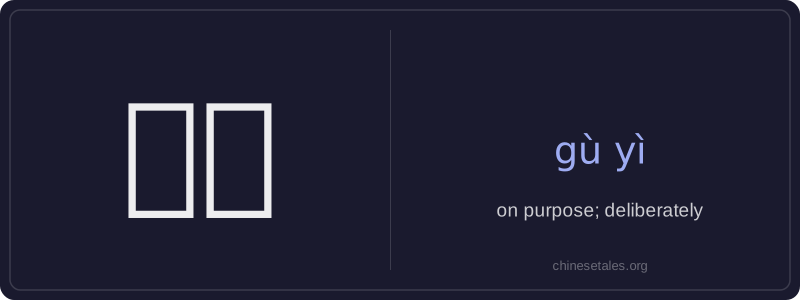
故意 (gù yì) is an adverb meaning 'on purpose' or 'deliberately' — used to indicate that someone performed an action intentionally, often with awareness of its effect, and sometimes with a hint of mischief, defiance, or disregard for consequences. The character 故 (gù) means 'intentionally' or 'for this reason', while 意 (yì) means 'intention' or 'will'; together, they reinforce the idea of conscious, willful action.
This word commonly appears before verbs in mid-sentence position, e.g., 他故意迟到 (He arrived late on purpose). It’s neutral in tone but can carry negative connotations depending on context — such as when describing disobedience, teasing, or sabotage — though it may also be used playfully or self-deprecatingly. It does not function as a noun or verb and never stands alone without a predicate.
Example Sentences
Related Words
背后
背后 literally means 'back + behind' and functions
中学
'Zhōngxué' literally combines 'zhōng' (middle)
见面
见面 literally means 'see face' — combining 见 (t
面条
‘面条’ (miàn tiáo) literally means ‘flour str
我的
我的 (wǒ de) is a possessive pronoun meaning 'my'
不对
不对 (bù duì) literally combines 不 (bù), meani
后来
Later (hòulái) is an adverb meaning 'afterwards'
在家
'Zài jiā' literally combines the preposition 'z