Word Explanation
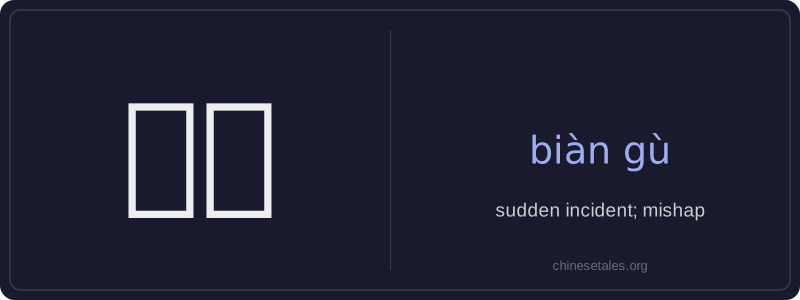
‘变故’ literally combines ‘变’ (biàn), meaning ‘to change’ or ‘sudden alteration’, and ‘故’ (gù), meaning ‘incident’, ‘event’, or ‘reason’. Together, it refers to an unexpected, often unwelcome event that disrupts normal circumstances—such as an accident, illness, death, or sudden financial loss. It carries a formal, somewhat solemn tone and is commonly used in written Chinese or serious spoken contexts, especially when discussing life-altering disruptions.
The word implies unpredictability and consequence: not just any change, but one with significant impact. It rarely describes trivial or positive surprises (e.g., winning a small prize). Instead, it’s associated with crises requiring adjustment—like family emergencies, workplace layoffs, or natural disasters. Because of its gravity, ‘变故’ is often preceded by modifiers like ‘重大’ (major), ‘突发’ (sudden), or ‘家庭’ (family), and appears frequently in news reports, official notices, and empathetic conversations about hardship.
Example Sentences
Related Words
背后
背后 literally means 'back + behind' and functions
中学
'Zhōngxué' literally combines 'zhōng' (middle)
见面
见面 literally means 'see face' — combining 见 (t
面条
‘面条’ (miàn tiáo) literally means ‘flour str
我的
我的 (wǒ de) is a possessive pronoun meaning 'my'
不对
不对 (bù duì) literally combines 不 (bù), meani
后来
Later (hòulái) is an adverb meaning 'afterwards'
在家
'Zài jiā' literally combines the preposition 'z