Word Explanation
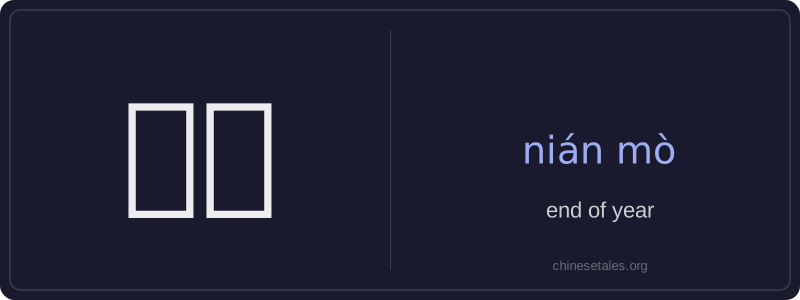
年末 (nián mò) literally means 'year end' — 年 (nián) means 'year', and 末 (mò) means 'end' or 'tail', referring to the final part of a period. Together, they form a compound noun denoting the closing period of the calendar year, typically encompassing December and sometimes early January in practical usage.
This term is widely used in business, finance, education, and daily life to refer to year-end activities: annual reviews, bonuses, holiday preparations, inventory checks, or personal reflections. Unlike the more formal or ceremonial term 岁末 (suìmò), 年末 is neutral, common in both spoken and written Chinese, and often appears in phrases like 年末促销 (year-end sales) or 年末总结 (year-end summary). It carries no seasonal or cultural connotations by itself but gains context from surrounding words — for example, it may imply holiday stress or celebration depending on usage.
Example Sentences
Related Words
背后
背后 literally means 'back + behind' and functions
中学
'Zhōngxué' literally combines 'zhōng' (middle)
见面
见面 literally means 'see face' — combining 见 (t
面条
‘面条’ (miàn tiáo) literally means ‘flour str
我的
我的 (wǒ de) is a possessive pronoun meaning 'my'
不对
不对 (bù duì) literally combines 不 (bù), meani
后来
Later (hòulái) is an adverb meaning 'afterwards'
在家
'Zài jiā' literally combines the preposition 'z