Word Explanation
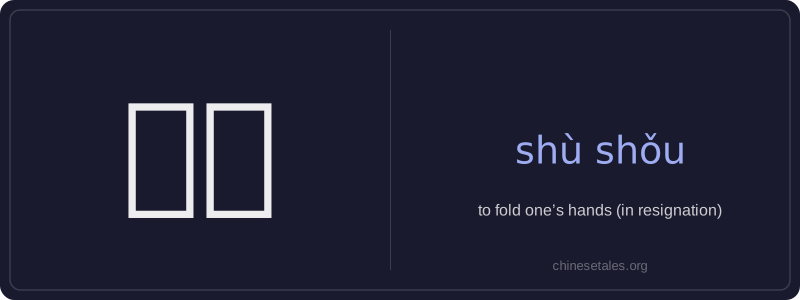
‘束手’ literally means ‘to bind one’s hands’ — combining 束 (shù, ‘to bind, to tie up’) and 手 (shǒu, ‘hand’). Figuratively, it describes a state of helplessness or resignation, where someone gives up trying because they see no way forward. It conveys passive surrender rather than active refusal, often implying external constraints or overwhelming difficulty.
This phrase is commonly used in formal or literary contexts — in news reports, historical narratives, or written descriptions of crisis situations. It rarely appears in casual speech; native speakers more often use colloquial alternatives like ‘没办法’ (wúfǎn) or ‘认命了’ (rènmìng le). ‘束手’ frequently pairs with words like ‘无策’ (wúcè, ‘without strategy’) to form the idiom ‘束手无策’, meaning ‘completely at a loss’ or ‘utterly helpless’.
Example Sentences
Related Words
背后
背后 literally means 'back + behind' and functions
不对
不对 (bù duì) literally combines 不 (bù), meani
中学
'Zhōngxué' literally combines 'zhōng' (middle)
见面
见面 literally means 'see face' — combining 见 (t
面条
‘面条’ (miàn tiáo) literally means ‘flour str
我的
我的 (wǒ de) is a possessive pronoun meaning 'my'
后来
Later (hòulái) is an adverb meaning 'afterwards'
在家
'Zài jiā' literally combines the preposition 'z