Word Explanation
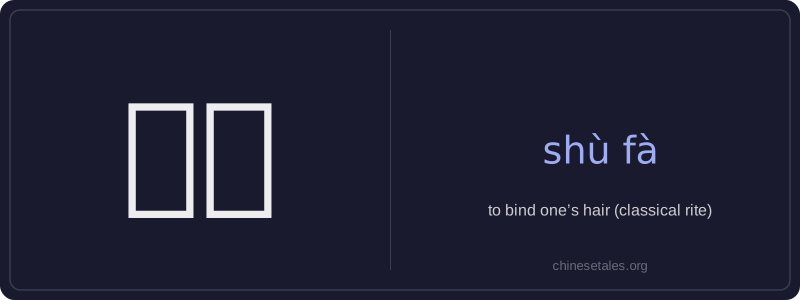
‘Shù fà’ literally means ‘to bind the hair’ and refers to an ancient Chinese coming-of-age rite for boys at age 15, when they would tie their hair into a topknot to signify maturity and readiness for scholarly or social responsibilities. The character 束 (shù) means ‘to bind, tie, or restrain’, while 发 (fà) means ‘hair’—together, they evoke the physical act and symbolic weight of this ritual gesture.
This term is now largely literary or historical; it appears in classical texts, historical dramas, and formal writing about traditional rites. It does not refer to everyday hair styling but specifically to the ceremonial binding associated with Confucian ideals of self-cultivation and social transition. Modern speakers rarely use it outside academic, artistic, or ceremonial contexts, and it carries strong connotations of tradition, discipline, and cultural continuity.
Example Sentences
Related Words
背后
背后 literally means 'back + behind' and functions
不对
不对 (bù duì) literally combines 不 (bù), meani
中学
'Zhōngxué' literally combines 'zhōng' (middle)
见面
见面 literally means 'see face' — combining 见 (t
面条
‘面条’ (miàn tiáo) literally means ‘flour str
我的
我的 (wǒ de) is a possessive pronoun meaning 'my'
后来
Later (hòulái) is an adverb meaning 'afterwards'
在家
'Zài jiā' literally combines the preposition 'z