Word Explanation
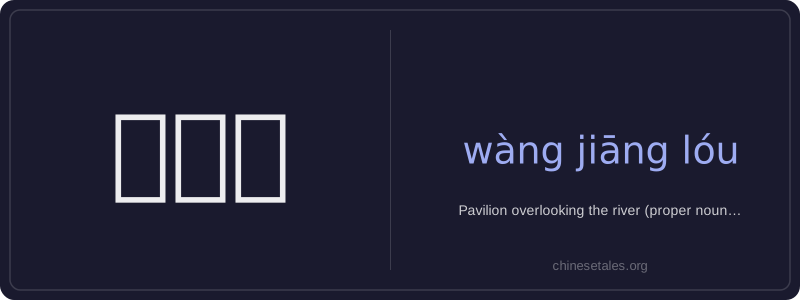
Wàng Jiāng Lóu literally means 'Pavilion Overlooking the River' — a compound noun formed from three characters: 望 (wàng) meaning 'to gaze/look toward', 江 (jiāng) meaning 'river' (typically a large, flowing river like the Yangtze), and 楼 (lóu) meaning 'pavilion' or 'multi-story building'. It is most famously the name of a historic scenic pavilion in Chengdu, Sichuan Province, built beside the Jinjiang River during the Tang Dynasty and later rebuilt. The name evokes classical Chinese aesthetics, where pavilions were constructed at elevated, picturesque riverbanks for contemplation, poetry, and appreciation of nature.
While it functions as a proper noun referring to that specific landmark, the term can also be used generically — especially in poetry, travel writing, or place naming — to describe any riverside pavilion with a view. It carries literary and cultural resonance, often suggesting tranquility, historical depth, and harmony between architecture and landscape. Learners should recognize it both as a fixed place name and as a poetic descriptive phrase.
Example Sentences
Related Words
背后
背后 literally means 'back + behind' and functions
不对
不对 (bù duì) literally combines 不 (bù), meani
中学
'Zhōngxué' literally combines 'zhōng' (middle)
见面
见面 literally means 'see face' — combining 见 (t
面条
‘面条’ (miàn tiáo) literally means ‘flour str
我的
我的 (wǒ de) is a possessive pronoun meaning 'my'
后来
Later (hòulái) is an adverb meaning 'afterwards'
在家
'Zài jiā' literally combines the preposition 'z