Word Explanation
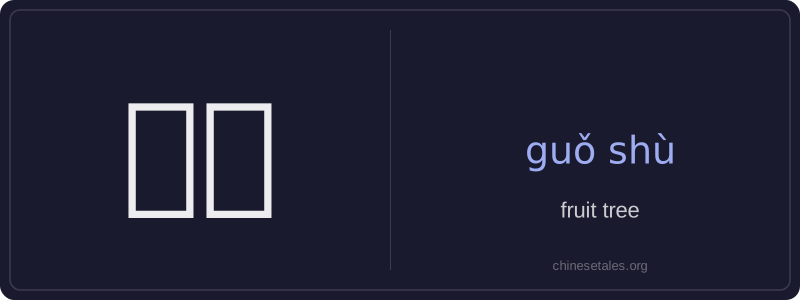
‘果树’ literally means ‘fruit tree’ — a tree cultivated specifically for its edible fruit. The first character 果 (guǒ) means ‘fruit’, and the second character 树 (shù) means ‘tree’. Together, they form a compound noun that refers to any woody perennial plant grown for its harvestable fruit, such as apple, pear, peach, or citrus trees. Unlike wild fruit-bearing plants, 果树 usually implies intentional cultivation, often in orchards or gardens, and may be grafted or pruned for optimal yield.
This term is commonly used in agricultural, horticultural, and everyday contexts — for example, when discussing farming, seasonal harvests, or home gardening. It does not refer to ornamental trees or berry bushes (which are typically called 灌木, ‘shrubs’), nor does it include non-woody fruit-bearing plants like bananas or strawberries. In formal writing or speech, 果树 is neutral and widely understood across Chinese-speaking regions.
Example Sentences
Related Words
背后
背后 literally means 'back + behind' and functions
不对
不对 (bù duì) literally combines 不 (bù), meani
中学
'Zhōngxué' literally combines 'zhōng' (middle)
见面
见面 literally means 'see face' — combining 见 (t
面条
‘面条’ (miàn tiáo) literally means ‘flour str
我的
我的 (wǒ de) is a possessive pronoun meaning 'my'
后来
Later (hòulái) is an adverb meaning 'afterwards'
在家
'Zài jiā' literally combines the preposition 'z