Word Explanation
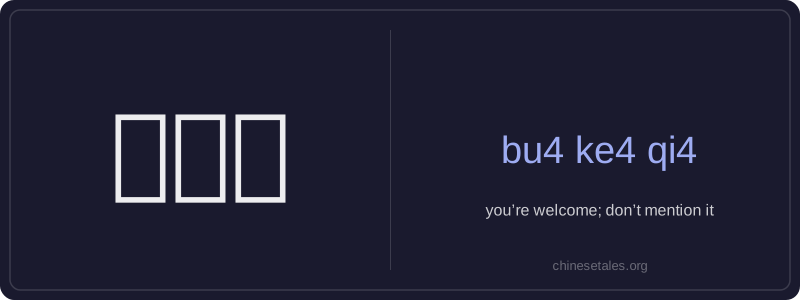
'Bù kè qì' is a polite, standard response to 'xiè xie' (thank you). Literally, it means 'not formal' or 'not overly polite'—the characters break down as 不 (bù, 'not'), 客 (kè, short for 'kè qì', meaning 'formal or ceremonious'), and 气 (qì, here part of the compound 'kè qì'). Together, they convey humility and friendliness: 'There’s no need to be so formal; it was nothing.' It reflects Chinese cultural values of modesty and downplaying one’s own effort when helping others.
This phrase is used almost exclusively in spoken, everyday interactions—when someone thanks you for holding a door, giving directions, sharing food, or offering assistance. It’s neutral in register: appropriate with friends, colleagues, elders, and strangers. Unlike English 'you’re welcome,' it carries no implication of obligation or hierarchy—it simply signals warmth and ease. It’s rarely used in writing except in dialogue or informal digital communication.
Example Sentences
Related Words
我的
我的 (wǒ de) is a possessive pronoun meaning 'my'
红色的
红色的 (hóng sè de) is an adjective meaning 'red
在家
'Zài jiā' literally combines the preposition 'z
学校的
'学校的' is a possessive phrase meaning 'school's'
大的
大的 (dà de) is the attributive form of the adjec
不对
不对 (bù duì) literally combines 不 (bù), meani
不要
'不要' (bù yào) is a two-character verb phrase m
你的
你的 (nǐ de) is a possessive pronoun meaning 'you