Word Explanation
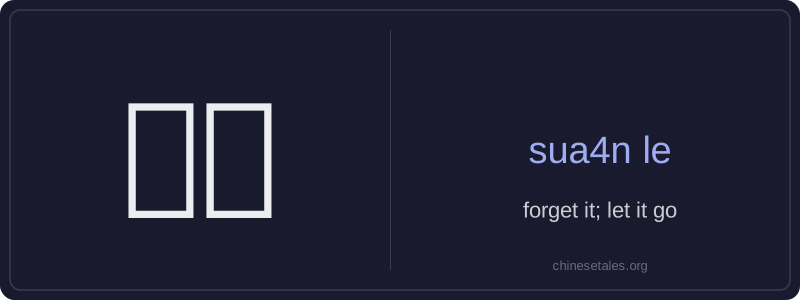
算了 (suàn le) is an interjection expressing resignation, giving up on something, or deciding not to pursue a matter further. Literally, 算 means 'to calculate' or 'to consider', and 了 marks a change of state — together, they convey the sense of 'let’s stop considering this' or 'it’s not worth the effort anymore'. It often carries mild disappointment, frustration, or pragmatic acceptance.
This phrase is commonly used in spoken Chinese to soften refusal, end an argument, abandon a plan, or dismiss a minor grievance. It’s informal and conversational, frequently appearing at the beginning or end of a sentence. While it can sound slightly abrupt, tone and context determine whether it comes across as weary, generous, or even playful. It’s rarely used in formal writing or official speech, and never with honorifics or in highly deferential situations.
Example Sentences
Related Words
我的
我的 (wǒ de) is a possessive pronoun meaning 'my'
红色的
红色的 (hóng sè de) is an adjective meaning 'red
在家
'Zài jiā' literally combines the preposition 'z
学校的
'学校的' is a possessive phrase meaning 'school's'
大的
大的 (dà de) is the attributive form of the adjec
不对
不对 (bù duì) literally combines 不 (bù), meani
不要
'不要' (bù yào) is a two-character verb phrase m
你的
你的 (nǐ de) is a possessive pronoun meaning 'you