Word Explanation
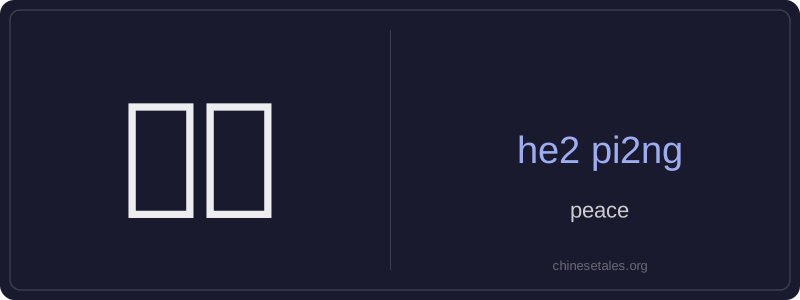
'Hé píng' literally combines two characters: 和 (hé), meaning 'harmony', 'together', or 'and', and 平 (píng), meaning 'level', 'calm', or 'equal'. Together, they form a compound noun meaning 'peace' — not just the absence of conflict, but a state of harmony, stability, and mutual respect among people, groups, or nations. It carries strong positive connotations and is deeply valued in Chinese culture and philosophy.
The term appears frequently in formal contexts — such as diplomacy ('peace talks'), education ('peace education'), and social values ('building a harmonious and peaceful society'). It’s also common in slogans, news headlines, and everyday expressions about safety, tranquility, and cooperation. While it can describe personal calmness, its primary use is sociopolitical or collective, emphasizing balance and coexistence rather than individual serenity.
Example Sentences
Related Words
我的
我的 (wǒ de) is a possessive pronoun meaning 'my'
在家
'Zài jiā' literally combines the preposition 'z
红色的
红色的 (hóng sè de) is an adjective meaning 'red
一天
‘一天’ literally combines the numeral ‘一’ (y
不对
不对 (bù duì) literally combines 不 (bù), meani
不要
'不要' (bù yào) is a two-character verb phrase m
学校的
'学校的' is a possessive phrase meaning 'school's'
大的
大的 (dà de) is the attributive form of the adjec