Word Explanation
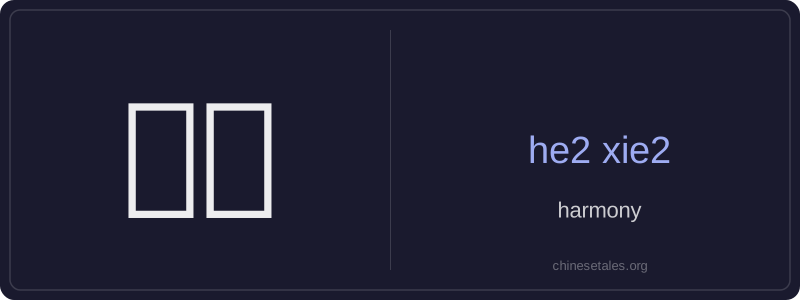
‘和谐’ (hé xié) literally combines ‘和’ (hé), meaning ‘peaceful,’ ‘gentle,’ or ‘in agreement,’ and ‘谐’ (xié), meaning ‘in tune,’ ‘congruous,’ or ‘harmonious.’ Together, they express a deep sense of balance, mutual respect, and seamless coexistence—whether between people, ideas, nature, or systems. It conveys more than mere absence of conflict; it implies active alignment, resonance, and shared purpose.
The word is widely used in formal and philosophical contexts—such as social harmony (社会和谐), musical harmony (音乐和谐), or ecological balance (生态和谐)—and appears frequently in official discourse, classical literature, and everyday expressions about relationships or aesthetics. While often abstract, it can also describe tangible situations: a well-coordinated team, a beautifully composed painting, or a family where members understand and support one another without friction.
Example Sentences
Related Words
我的
我的 (wǒ de) is a possessive pronoun meaning 'my'
在家
'Zài jiā' literally combines the preposition 'z
红色的
红色的 (hóng sè de) is an adjective meaning 'red
一天
‘一天’ literally combines the numeral ‘一’ (y
不对
不对 (bù duì) literally combines 不 (bù), meani
不要
'不要' (bù yào) is a two-character verb phrase m
学校的
'学校的' is a possessive phrase meaning 'school's'
大的
大的 (dà de) is the attributive form of the adjec